Turkey and the European Union in the light of reality
Cengizhan Çelik

We have explained in detail the mutual benefits, differences, and mutual needs between Turkey and the European Union, as well as Turkey’s journey in the accession process.
Since December 1999, when Turkey was declared a full candidate, there have been many changes in Europe and Turkey, including economic, strategic, cultural, and technological areas. While the parties have sometimes come closer to each other, there have also been differences of opinion for different reasons. While some countries that became candidates later than Turkey were declared members after the candidacy process, Turkey’s candidacy process and its increasingly complex membership journey came to mind. We interviewed Suat Aksu, a sociologist, European Union Grant Projects Specialist, and PhD student at the Social Sciences Research Centre in Lithuania, about this issue, which has been studied and written about many times both academically and in the media.
Important for the member states of the European Union
When we look at the balance of power in the world, we see that every country is trying to improve itself in security, economic, commercial, political, and social terms and that it does this through various collaborations. Within these unions, the EU aims to be a social state in the first place and aims to protect and improve both human values and the nature we live in with goals such as digital and green transformation, and in doing so, it wants to ensure that all member states have equal access to opportunities. As such, the EU is of great importance for member states, as all countries are aware that the EU’s aid increases the welfare levels and recognition of their countries.
The concept of Europeanisation
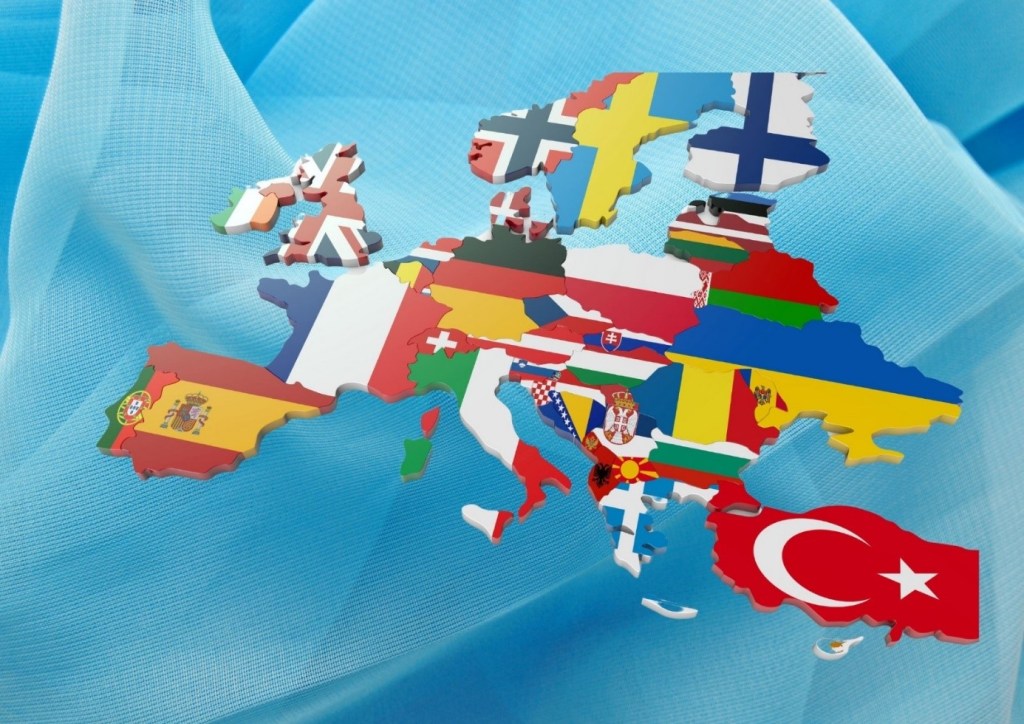
The first condition to enter the European Union is that the candidate country must be on European territory. Therefore, while the candidature of countries such as Morocco was rejected within a short period because it was not on European territory, Turkey’s candidature was not rejected immediately and its candidature application was approved because part of Turkey’s territory is in Europe. However, how European the Turks are has always been a matter of debate among people from both sides.
”We protect our Turkish identity”
Suat Aksu answered our question “How European are Turks?” as follows; “I worked as an EU project manager in Lithuania between 2021-2023. In these 3 years, I had the opportunity to visit more than half of the 27 EU member states, a total of 16 countries, and to carry out various project activities. I had the chance to observe what they think about Turkey or Turks in each country, both through the institutions I worked for and my colleagues. Of course, being European is a phenomenon that is open to a very wide range of thinking. Based on my observations, I will evaluate this question in terms of the values that the European Union aims to bring to the citizens of the member countries. Yes, I cannot give a high rate as an answer to this question for us. However, the fact that this rate is low also means that we preserve our Turkish identity. Although being European is a phenomenon that belongs to the European Union countries, I think it is very important for each country to preserve its own identity.”
After his statements, Aksu explained the question “How European are Turks?” in 4 articles.
Foreign language
”English is of great importance for communication and integration”
Aksu mentioned the importance of foreign language as the first item. Emphasizing that it is very important to know English, which is the common language for communication and integration, the sociologist used the following expressions: “Unfortunately, the rate of speaking English in our country is very low. Let me tell you about an interesting moment. I attended a meeting of one of our projects in Spain. Of course, I am representing the institution I work for in Lithuania, so they are likely to mistake me for a Lithuanian. During a conversation with the partners, they were talking about other projects they were doing. The subject of Turkish partners came up andalmost all of them were dissatisfied with the problems they experienced in the projects due to thelack of foreign language skills of Turkish partners. Of course, not everyone in Europe speaks English, but this issue is very important for communication and integration.”
Lifestyle and Culture
”Our friendliness makes them feel different”
Suat Aksu, while talking about lifestyle and culture, made the following statements; ”When we look at the sociological sense, we see an individual culture structure in almost all European countries and a collective culture structure in Turkey. What I mean here is that while we are a society that likes to be more intertwined with people, to be united, to act together, European people pay a lot of attention to the individual, to themselves, and the distance in social relations. This, of course, creates a culture shock for us. We can say that a Turkish person can easily observe this when traveling to Europe. On the contrary, when a European travels to Turkey, our friendliness makes them feel different. I think that finding a balance between these two is only possible if countries and cultures get to know each other more closely.”
Religion
”Media exaggeration can affect our perceptions”
Stating that there are cultural differences arising from the religious structure of Europe and Turkey, the sociologist gave the following statements, ”I would like to point out that there may be differences only because European countries reflect a cultural structure from the Christian tradition, while Turkish culture reflects a cultural structure from the Islamic religious tradition. For example, there are many misunderstood issues. Unfortunately, the exaggerated reflection of our culture and lifestyle in the media can create unrealistic perceptions in people. The same is true for us. We also have many misconceptions about Europeans. I have often heard negative comments about the European lifestyle, especially from older people. No matter how funny it may be to talk about these things, I think that there are issues that need to be explained in more detail for both sides and that need to be clarified through mutual dialogue.”
Suat Aksu also talked about the issues that we are European and made statements about tourism and being a partner country.
Tourism
”Our country has proven itself in tourism”
Suat Aksu said that we are a popular country with our food and cities in the field of tourism and added the following statements: “Someone in Italy asked me where I came from. I said Turkey. He said I didn’t understand, I repeated it: Turkey, Istanbul, Ankara… Oh ok ok, he said Istanbul. It may sound strange to you, but he does not know Turkey, he knows Istanbul. When I said I was Turkish in Lithuania, everyone said: “Ooo Antalya, kebab kebab…”. Here weunderstand that our country has shown itself in tourism, with its cities and food. In this regard, Turkey is a popular country in terms of tourism because it is a very preferable route.”
Being a partner country
”We are getting to know each other better through our cooperation with the EU”
Aksu said that being one of the EU partner countries, I think that our cooperation with the EU contributes to us getting to know Europe better and Europe getting to know us better. If I give an example myself, by working on EU grant projects since 2018, we have enabled hundreds of young people to receive training in various institutions in Europe. I can still directly observe the positive effects in both education and economic fields by establishing partnerships with Turkey in the projects I do abroad. He said that the opportunities provided by our partnership with the EU are really valuable in this regard.
What do Europeans think about Turkey?
Aksu, who lives in Lithuania, explained the thoughts of Europeans about Turkey in the following sentences. ”When you say Turkey, there are 4 things that generally come to mind in Lithuania. Antalya, Bayraktar UAV, kebab and Turkish TV series. I can say that Turkey ranks first in Lithuanians’ preference routes for holidays. There are direct Antalya flights in the summer period and it is cheaper than Istanbul flights. Lithuania is a country where almost 8 months of the year are cold. This, of course, harms people’s mood. Nature is clean and beautiful, but there are no mountains in the country, for example, they do not have a warm sea where they can swim. As such, it is very normal that Turkey seems like paradise to them. When they see the variety of food and the friendliness of the people in Turkey, it is impossible for them not to be impressed. Especially the drama in our TV series affects them a lot and they cannot stop watching them. I can even say that women watch more. Many of my friends even learned someTurkish words from the TV series.”
Baykar impact
Bayraktar UAVs, which are a deterrent force in the next generation of war strategies, have achieved great success both in Turkey and in the international arena. One of these successes is its performance in the Ukraine-Russia war. Sociologist Suat Aksu told the story between Baykar and the people of Lithuania as follows: “Lithuania had collected money among its people to send Bayraktar TB2 from Turkey to support Ukraine in the war. Baykar company officials, who did not want to remain indifferent to this campaign, sent Bayraktar TB2 to Lithuania free of charge. This made a big noise in Lithuania. Afterward, the Lithuanian Postal Organisation immortalized this event by printing 45 thousand postage stamps with a picture of Bayraktar UAV, and encouraged the public to buy the stamps and use the proceeds to support Ukraine.”
How successful is Turkey in the European Union membership process?
”Our effort to harmonize is obvious”
Suat Aksu also evaluated Turkey’s EU accession process, ”When we look at the macro level and in terms of policy, I can say that it is successful. Our harmonization effort is obvious. As I mentioned, I consider cooperation, especially in the field of education and economic cooperation very successful. However, when we look at a little more micro relations, we can see that many people and institutions in Turkey, due to the fatigue brought by the economy, turn the EU opportunities into opportunities and use them for personal profit. The justification for this is, of course, that we bring foreign currency to the country, but this mentality is not expected in the social state criteria targeted by the European Union. I believe that cooperation with the EU should be evaluated within the scope of the contributions that both sides will provide to each other, the establishment of sustainable cooperation, and a cultural exchange in which both sides will learn from each other, rather than focusing only on the benefits to Turkey.”
What would be the advantages for other member states if Turkey becomes a member of the European Union?
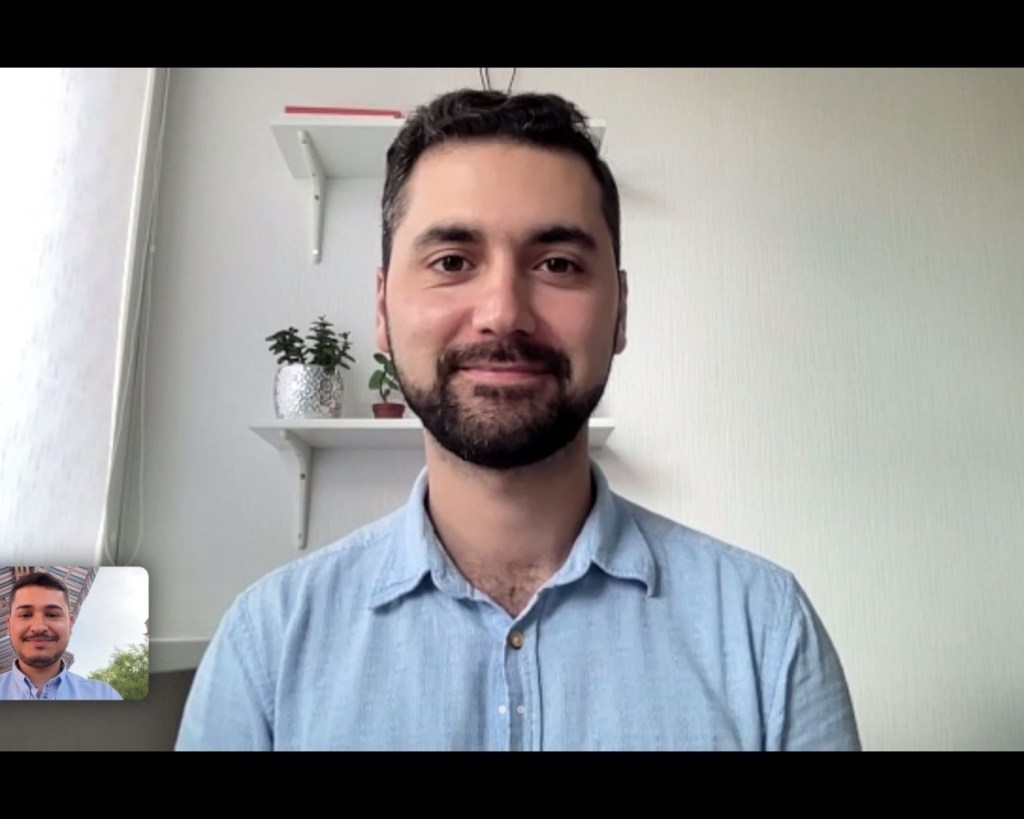
Sociologist Suat Aksu gave an itemized answer to this question, ”As advantages, the increase in the EU’s economic and global effectiveness, Turkey’s strategic position and cooperation in the field of security can bring advantages. I can specify a few items about this.
As Turkey is a large economy, EU member states can access Turkey’s market more easily and expand their trade.
Turkey’s accession to the EU could lead to a geographical and demographic enlargement of the EU, thus increasing its global influence.
Turkey’s geographical location may provide a strategic advantage for EU member states. There may be potential for cooperation, especially on issues such as energy trade and transport routes.
Turkey’s accession to the EU could lead to closer cooperation on regional and international security issues.
Suat Aksu finally said that he wished the JOIN project ease in achieving its goals and success in our work, in addition, he invited all readers who want to take a look at his work to his YouTube channel and ended his speech with the following sentences. ”Anyone who wants to cooperate or exchange ideas on the topics we talked about can reach me via social media, e-mail, and YouTube.”
To summarise, Turkey and the EU need to understand each other better and for both sides to act in unity. Both sides need each other in many areas such as strategic, economic, and security issues. What needs to be done is that the parties should fulfill each other’s conditions, approach with common sense and protect each other’s interests. When all this is done successfully, it will be easier for culture, religion, and other factors to harmonize over time.

 Eskısehir ın Europe