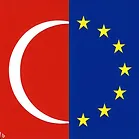
How does the European Parliament affect Turkey?
Duru Şevval Ayyüce
The European Parliament is the directly elected legislature of the European Union and consists of 705 Members of the European Parliament, elected every five years. Its main roles include legislative, supervisory, and budgetary functions.
Although Turkey is not a member of the EU, it has been a candidate for membership since 1999 and maintains a customs union with the EU. The European Parliament’s decisions affect the country’s political environment, economic conditions, and international relations.
How will the new migration deal approved by the European Parliament affect Turkey?
The new Asylum and Migration Agreement approved by the European Parliament and adopted by the European Union (EU) Commission will ensure stricter screening of migrants at the borders of the European Union, a ‘compulsory solidarity’ mechanism that will reduce the burden on ‘countries of entry’ such as Greece, Italy and Spain, and a fast-track processing of asylum seekers who are likely to be rejected, where countries that do not want to accept asylum seekers will have to pay 20,000 euros per person they do not take within the set quota.

Assoc. Prof. Dr. Ali Onur Özçelik explains the impact of this reform on Turkey as follows: “The impact of this reform on Turkey could be as follows: Turkey borders Greece, the country of entry to the EU, and the most important area that Turkey can talk to the EU right now is the issue of migrants. There is a memorandum of understanding that Turkey signed in 2016. In this agreement, there are issues such as preventing migration to the EU and establishing an income acceptance mechanism. With the new migration agreement, Turkey may be able to reform and work on its refugee agreement, receive financial aid again, or benefit from certain policies created by this migration agreement. However, apart from the financial expectation, there may also be disadvantages in terms of domestic politics, such as adaptation to integration models. There is a growing political debate in Turkey on the issue of migrants. Taking this into account, there may be another meeting.”
Stefano Fantaroni, Head of Political Affairs, Press and Information Section of the EU Delegation to Turkey, supported Turkey’s relationship with the EU on the migration issue: “First of all, we very much appreciate what Turkey is doing for Syrian refugees, but this is already a very important joint effort between Turkey and the EU and the EU is providing significant support to Turkey. Very recently a new package of additional support was approved. The relationship with the government is very good, but the real solution to the problem will come with the solution to the problem in Syria.”
“Turkey sees itself in trouble in terms of the Customs Union”
One of the other areas in which Turkey has developed strategic cooperation with the EU is the Customs Union. Turkey’s obligations under the Association Council Decisions are free movement of goods and harmonization of legislation. Assoc. Prof. Dr. Ali Onur Özçelik explained the situation by stating that Turkey feels disadvantaged in this regard: “The date we signed the Customs Union was 1996, today we are in 2024 and it is important to make a customs planning following the conditions of the era. Turkey sees itself at a disadvantage and since it is not in the decision-making mechanism, it is obliged to implement all the innovations and reforms that Europe has made in this sense. Although the role of the European Parliament is increasing, it does not play a very effective role here. However, political and economic instability must be somehow voiced by the European Parliament. This could undermine the confidence of EU investors in the Turkish economy and create the impression of an unstable economy. We may have difficulties in accessing EU funds or aid. If Turkey can do some serious lobbying in the European Parliament, maybe the decisions to be taken in the European Parliament can have an impact on the Council or other EU institutions, but confrontation with the European Parliament is not a scenario we would prefer. It would not be very sustainable for both sides.
How will Turkey be affected if a radical right-wing party is elected in the 2024 European Parliament elections?

Assoc. Prof. Dr. Tirşe Erbaysal Filibeli stated that right-wing populism is on the rise in Europe and as a result ofpopulism, they use offensive statements and spread disinformation, especially against vulnerable groups. She supported this claim with the following words: “During the pandemic, they said that migrants were potential Covid carriers and triggered anti-immigrant sentiment. Nowadays, the number of migrants in Europe is increasing, and the European Parliament is becoming more and more right-wing. We can say that no matter how much the structure of the European Parliament changes, its policies do not change much.”
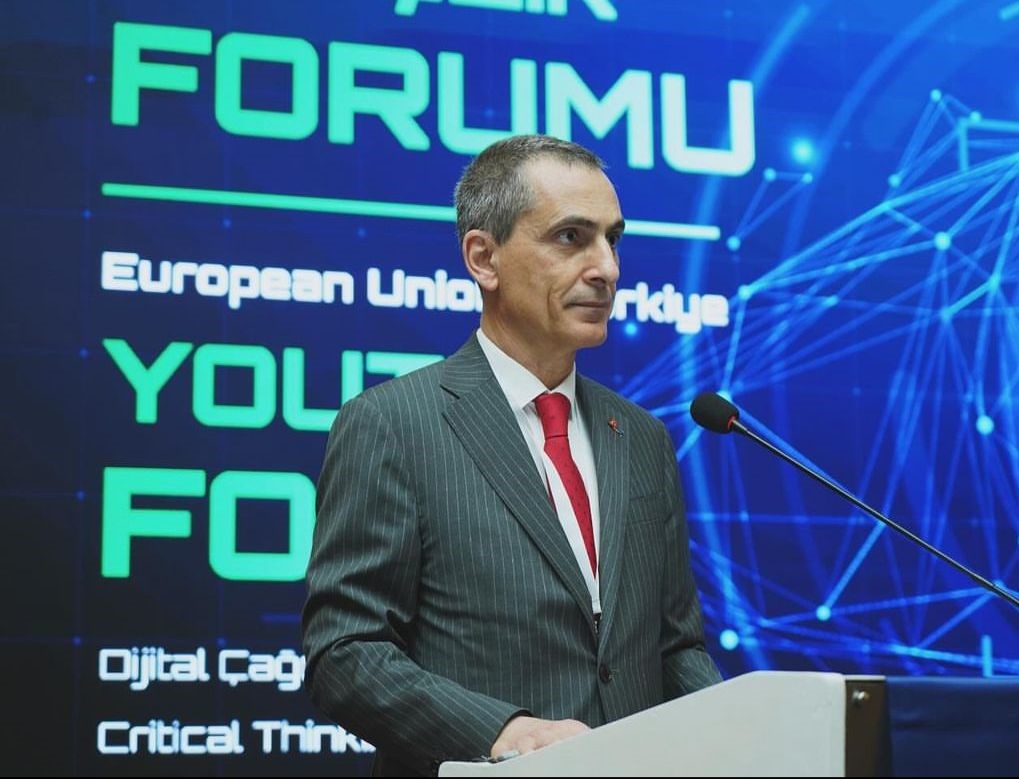
Stefano Fantaroni, Head of Political Affairs, Press and Information Section of the EU Delegation to Turkey, stated that it would be difficult to predict the European Parliament elections, but Turkey and the European Union have great economic relations and common interests, so their relations have a positive potential regardless of the outcome of the elections.
Assoc. Prof. Dr. Ali Onur Özçelik expressed his thoughts on what might happen if a radical right-wing party is elected in the European Parliament elections as follows: “Radical right-wing groups and Turkey are not very reconcilable. They have anti-Turkish rhetoric, but on the other hand, they will put Turkey under serious pressure in areas such as human rights, democracy, and the rule of law, as the European Parliament is doing now. The Parliament will be more vocal. On the other hand, the radical right is known for being anti-immigrant. In this case, in a scenario where the country you will be dealing with, Turkey, opens its borders after confrontations, there could be huge problems for both sides. On the one hand, trying to put pressure on the parliament, on the other hand, wanting to establish a relationship with Turkey, which is their most important interlocutor on migration issues, can help to balance. These two areas will be decisive.”




 Eskısehir ın Europe