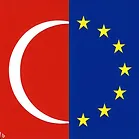
Sustainable energy green economy
Almıla Hilalsu Dindar

In 2019, the European Union (EU) launched the transition to a green economy to stop the climate crisis by announcing the European Green Deal. The European Green Deal encompasses the circular economy, sustainable development, sustainable finance, and decoupling economic growth from resource use. The green economy is defined as a model that aims to reduce environmental risks and ensure social equity in addition to economic growth.
Green Economy of Turkey
Turkey’s green economy performance generally lags behind that of European Union (EU) countries. Like Turkey in general, Eskişehir performs below the EU average in the areas of circular economy and sustainability. However, some progress can be made with the contribution of local governments and various projects.
If the actions planned by the EU and policies in line with the Paris Climate Agreement are continued, it is possible to come closer to the planned targets in the future. In particular, fundamental changes in the energy sector will contribute to the decarbonization of the energy system in the coming years. This situation supports the increase of renewable energy production, in particular wind and solar energy, and leads to an increase in energy efficiency.

However, current policy implementation and targets are not fully adequate. The transition to a green economy and the energy transition are progressing slowly. The EU must therefore act and act more effectively.
The EU should further strengthen its green economy policies and invest more in renewable energy sources. Comprehensive strategies for achieving energy efficiency strategies should be developed. Social policies should also be taken into account to ensure that communities and regions are not left behind in this transformation process.
Turkey aims to accelerate its transition to a green economy within the framework of the European Green Deal (EGoM) launched by the European Union in 2019. The study, conducted by Gülay Küçük and Betül Yüce Dural of Anadolu University, assesses Turkey’s performance in this area and identifies its view of the future.
According to the study’s findings, Turkey’s performance in the green economy performance falls short of meeting the criteria set by the European Green Deal. In particular, high greenhouse gas emissions are a serious obstacle for Turkey.
Turkey ratified the Paris Climate Agreement in 2021 and committed to achieving net-zero carbon emissions by 2053. In this context, steps have been taken to use renewable energy, increase energy efficiency, and improve resource management.
The researchers emphasize that more comprehensive and effective policies need to be developed to improve Turkey’s green economy performance.
Assoc. Prof. Dr. Betül Yüce Dural said that small and medium-sized enterprises are not aware of the impending danger. She explained that if no efforts are made to protect nature during the production of a product if this product pollutes the soil, water, and air, the EU will not buy these materials and the carbon regulation will be applied.

Betül Yüce Dural said that they met with some big companies in Eskişehir 2-3 years ago. They know about the carbon regulation, they have engineers and teams for this application, and they have informed all their employees in the company about this issue. She stated that big companies are ready for this system change, but small companies are not aware of the green agreement.
Betül Yüce Dural explained that if practices such as carbon footprinting are not adapted, small companies will end for small companies and this is a real danger. Betül Yüce underlined that these regulations require a radical change.
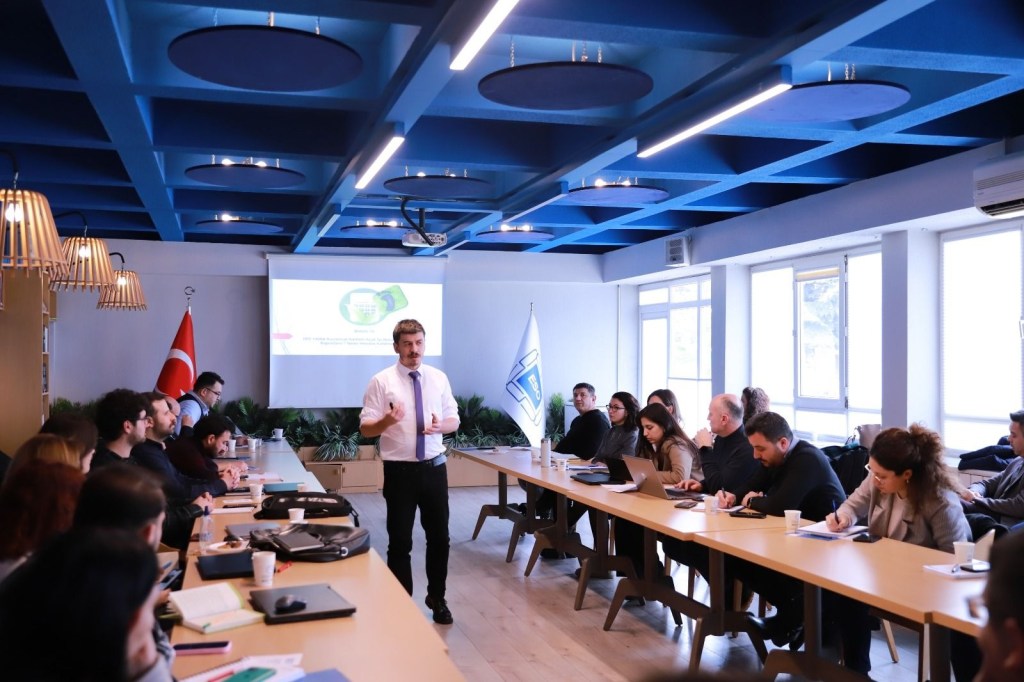
She stated that the Eskişehir Chamber of Industry has studied these practices and has informed all its registered members. She emphasized that there should be budgetary changes such as installing filters in chimneys and switching to wind energy. She said that the provision of these materials must meet EU criteria.
If we want Turkey’s and Eskişehir’s exports to increase in the coming years, all companies and factories should attach importance to the EU Green Agreement. The public, producers, and factory owners need to be informed and mobilized. Continued development and improvement efforts will be important for Turkey to achieve its green economy goals. In particular, reducing greenhouse gas emissions and improving performance on environmental indicators will play a key role in Turkey’s transition to a sustainable economy.

 Eskısehir ın Europe