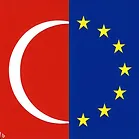
The influence of Turkish Culture in Germany
Selma Brosterhus
When people in Eskişehir ask me why I chose Turkey for my Erasmus stay, I often say that I am interested in Turkish culture because I experience so much of it in Germany. Most of my parents’ neighbors are Turkish or Kurdish, more than half of my class in primary school had Turkish roots, and when I leave my flat in Berlin, I walk through a street full of Turkish and Arabic restaurants, cafés, and supermarkets. Lahmacun, Menemen, Simit, and the Germanized Kebab are a normal part of my eating habits.
Demographics of Turkish Population in Germany
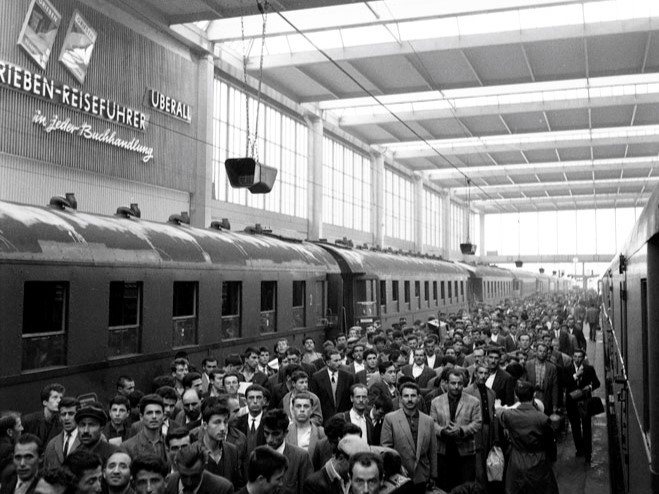
According to the Federal Statistical Office, around 1.5 million people with Turkish citizenship will be living in Germany in 2024. If you add those with German citizenship, the figure is even higher: 12% of Germany’s approximately 85 million inhabitants have Turkish roots, making it the most common migration background. This can be explained primarily by labor migration in the 1960s. Due to a shortage of labor and to keep wages low, Germany concluded a recruitment agreement with Turkey, Spain, Italy, and Greece. As a result, 825,383 Turkish and Kurdish guest workers came to Germany in 1961. The influx of families and the unstable political situation in Turkey in the 1980s led to further waves of migration.
Challenges of Integration and Public Debate
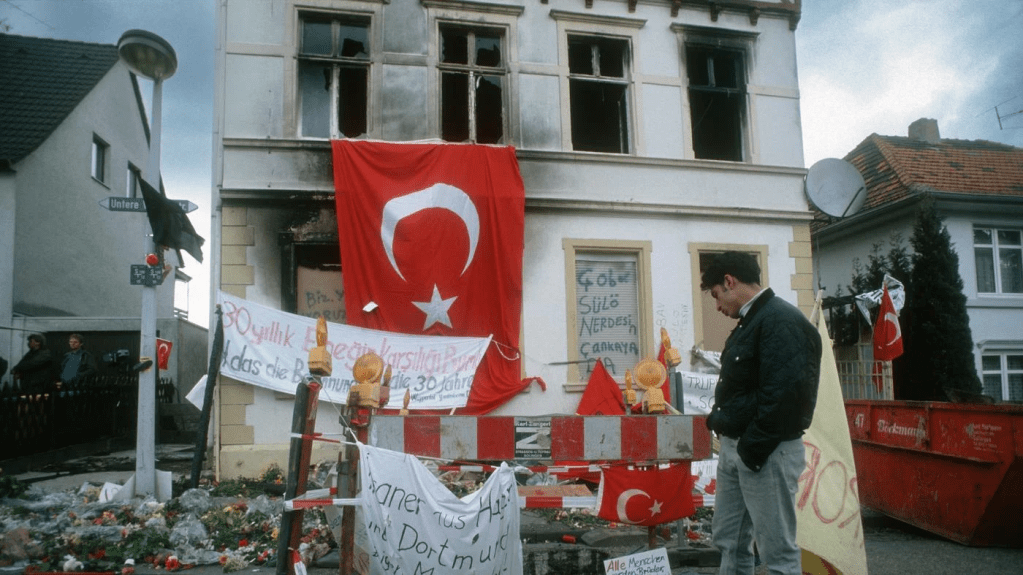
The question of the extent to which integration has been successful has always been the subject of public debate, revealing racist and xenophobic worldviews among Germans as well as questions of identity and cultural differences. In the 1980s, there was an unsuccessful attempt to reduce the number of people of Turkish origin in Germany by 50% because their culture was considered ‘too different’. Since labor migration, there have been repeated racist and Nazi-motivated murders and terrorist attacks on citizens of Turkish origin. For example, the NSU series of murders by a right-wing extremist terrorist group between 2000 and 2006 was publicly discussed under the highly problematic name of ‘kebab murders’.

Study on Integration of Turkish-Origin People in Germany
The results of a study investigating the integration of people of Turkish origin in Germany revealed various problems with integration. For example, immigrants in cities are often spatially separated from other parts of society. Separate neighborhoods are formed, often on the outskirts of the city, which makes it difficult to make social connections or improve German language skills. At the same time, these areas often have poor infrastructure, few leisure facilities, and precarious educational situations. This in turn means that the chances of leaving the neighborhood are very low. Physical separation is also not conducive to social integration, as personal contact would reduce prejudices against people with a migrant background and could increase acceptance among the population. In addition, even well-integrated people with Turkish roots, German citizenship, and native German language skills, who have spent their entire lives in Germany, are still regarded and treated as ‘foreigners’ by many and regularly experience racism.
Perceptions in Turkey Towards German Turks
So, when I tell people in Eskişehir that I come from Germany and have many points of contact with Turkish culture there, I always get the same reaction: we don’t like the German Turks. Why? When I ask them, they give similar answers. Mostly it’s about voting rights in Turkey. A Turkish student tells me that it is wrong for him that people who don’t live here have such a big influence on the political situation in Turkey and therefore also on his everyday life. He says the topic is very emotional for him, and it shines through that he dreams of a political change that could be blocked by the voting behavior of Turks in Germany. Another student tells me that his relatives in Germany come here and do not accept modern, cultural rules but rather cling to outdated rules.

The Complex Identity of German Turks
This perspective opens a complex picture in which a large group of people lose touch with their country of origin and at the same time may not experience full integration in their new home country. Their identity in Germany is characterized by attributions from outside, in which they are reduced to a country of origin that they may never have been to. However, this identity is also based on the memory of a country that no longer exists because it has changed over time and has new ideas and dreams today.



 Eskısehir ın Europe