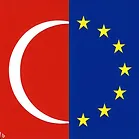
The key to the European Union: Dual citizenship
İrem Cansu Pekin

Although the European Union (EU) is primarily perceived as an economic organization, it offers numerous privileges in economic, social, and political domains to its member states, business partner states, and their citizens. This is especially beneficial for citizens of EU member states. For instance, EU citizens enjoy the freedom to work across member states, attend universities in other member states, and move freely within the EU. The high standard of living in many EU countries has consistently attracted people from outside the Union. There are various paths to EU citizenship, primarily through gaining citizenship in an EU member state, which opens several routes to EU citizenship.
One notable path is through ancestry. For example, individuals whose ancestors lived in an EU member state can apply for citizenship based on their heritage. Many Turks, whose families migrated to Anatolia during population exchanges, are now reclaiming citizenship rights from Balkan states, many of which are EU members. We discussed this topic with Belgin Pekin, a Turkish-Romanian sworn translator and dual citizen, and Tarık Pekin, a medical doctor in Romania.
The Legal and Bureaucratic Stages of the Romanian Citizenship Process
Belgin Pekin explained the bureaucratic processes involved in obtaining Romanian citizenship: “Romania accepts citizenship applications throughout the year, and these are assessed solely by the Romanian government. Applications must be submitted to the Romanian government or its authorized institutions. The citizenship policies are governed by laws enacted on March 6 and November 21, 1991. According to these laws, there are two primary ways to become a Romanian citizen: by birth or through several methods for foreigners.”
She elaborated on the requirements for obtaining citizenship under Romanian law:
- Romanian citizenship can be granted by descent if:
- One or both parents are Romanian citizens.
- At least one grandparent was a former Romanian citizen who lost citizenship involuntarily.
- Children under 18 can obtain citizenship with their parents, but those over 18 must apply separately.
Applicants can collect their citizenship applications and required documents to submit to the National Naturalisation Office (ANC) of the Ministry of Justice. While gaining citizenship through residence in Romania is not overly challenging, the process requires precise steps and coordination with experienced institutions to expedite it.
Why Do Turkish Immigrants Seek Citizenship in Balkan States?

The EU’s appeal is a significant factor driving Turkish immigrants to seek citizenship in Balkan states, as Belgin Pekin explained. “The EU has been a magnet for individuals from other countries due to its economic, social, and democratic advancements. Migration to EU countries, initially driven by economic needs, continues for various reasons. While each EU country has its own migration laws and practices, there are emerging common regulations across the Union.”
Why Is EU Citizenship Important to Turks?
The desire for EU citizenship underpins many applications to Balkan states. According to Belgin Pekin, “Romania’s EU membership grants its citizens several rights, such as free movement within Europe, access to EU universities, tax benefits, and work opportunities without permits. Additionally, Romanian citizenship is one of the more affordable options among EU countries. Romanian license plates also grant broader usage within the EU. Living costs in Romania are relatively low by European standards.”

Citizenship Granting Rates in EU Countries
Discussing citizenship granting rates in EU countries, Pekin noted, “In 2021, Sweden had the highest naturalization rate in the EU, granting 10 citizenships per 100 resident foreigners. This was followed by the Netherlands (5.4), Romania (4.6), Portugal (3.7), and Belgium and Spain (both 2.7). Conversely, naturalization is rare in some countries; Lithuania granted only 0.2 citizenships per 100 resident foreigners, followed by Latvia (0.3), Estonia (0.5), and Czechia, Croatia, and Slovakia (all 0.7). Immigration rules differ significantly across countries, with Austria requiring a ten-year residence and high school-level German proficiency for naturalization.”




 Eskısehir ın Europe