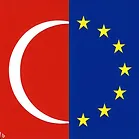
With U.S. support withdrawn, the EU rolls up its sleeves: What will ‘ReArm’ bring?
Kağan Aybars Aslan
The recent increase in wars and conflicts has posed a major threat to European Union countries. European Commission President Ursula von der Leyen stated that with the “Rearm Europe” plan, they will not only rearm the EU but also provide arms to Ukraine, which is fighting for its survival.
European Commission President Ursula von der Leyen announced a plan called “Rearm Europe” to increase military capacity and strengthen the EU’s defense industry. This plan emerged after the United States halted its military aid to Ukraine, bringing forth the idea that Europe must take responsibility for its own security. She stated that member states would be granted more financial assistance for investments in the defense industry and that it would be possible to increase defense spending. She said that 150 billion euros in credit would be provided to member states for defense investments, and the funds would be used in areas such as air defense systems, ammunition, and cyber defense. These developments are interpreted by experts as part of the EU’s efforts to act more independently in the field of defense.
Trump demands more military spending from NATO allies
The NATO Secretary General stated that NATO members would need to spend “much more than 3%” of their economies on defense. According to NATO’s 2024 projections, Poland will again be the country with the highest military spending relative to its economy for the second consecutive year. Poland is expected to allocate 4.1% of its gross domestic product to defense. Estonia ranks second with 3.4%, and the United States is third with 3.4%, a ratio that has remained roughly the same for the past decade. The current target agreed upon in 2014 was for NATO members in Europe to allocate 2% of their GDP to defense by 2024. That year, only three countries—the US, the UK, and Greece—spent more than 2% on defense.
Germany suggested it could increase its defense spending to 5% of its GDP in line with US President Donald Trump’s demands. German Foreign Minister Johann Wadephul met with US Secretary of State Marco Rubio in Turkey to discuss the issue. Wadephul stated that Germany would comply for the first time with the US President’s call for 5% defense spending. Former Chancellor Olaf Scholz of the Social Democrats distanced himself from Trump’s high demand. In a statement made earlier this year, Scholz said, “5% defense spending would mean over 200 billion euros annually. This would only be possible through significant tax increases or major cuts in areas that are important to us.” Chancellor Friedrich Merz, on the other hand, stated that investing more in Germany’s military, the Bundeswehr, is vital. Merz visited Lithuania to strengthen NATO’s presence and deter Russian threats in the Baltic region. On Thursday, he was welcomed by Lithuanian Foreign Minister Kestutis Budrys. This new unit of 4,800 soldiers and 200 civilian personnel aims to reinforce NATO’s presence in the region.
Far-Right parties gain influence in Europe
Far-right parties are walking the corridors of power in countries like Italy, Hungary, the Netherlands, and Finland. In France and Germany, far-right parties are influential in law-making on key issues such as migration and asylum policy, despite being in opposition. Members of the European Parliament gather in political groups made up of parties from different EU countries. Groups further to the right of center-right conservatives are usually referred to as “far-right.” These nationalist parties want less European cooperation and prioritize their own national interests. Many are anti-Islam and want to drastically restrict immigration to the continent.
The political group called “European Patriots” stands out with its more skeptical stance toward support for Ukraine. This group includes Hungary’s Fidesz party, led by Prime Minister Viktor Orban, who was criticized for his controversial handshake with Russian President Vladimir Putin. Hungary’s efforts to delay or block EU sanctions due to the war in Ukraine have also drawn criticism. Nationalist leader Orban positions his country against the “Western world,” describing the West as a source of rootlessness and destruction. According to Euronews, in a 2024 speech, Orban said, “They start wars, destroy worlds, redraw countries’ borders, and consume everything like locusts.”
Hungarian opposition leader Peter Magyar crossed the Romanian border on foot with his supporters. He was welcomed in the Romanian city of Oradea by his followers and told BBC News, “We are not going to create tension or harm our Hungarian brothers, but to show solidarity.” Before setting out, he said, “The tired, corrupt, and discredited Prime Minister sees Hungarians abroad as political tools. He tries to win them over not with faith, loyalty, or patriotism, but just for votes.” In another speech, Magyar said, “Orban’s destruction, hatred, and polarization are a thing of the past. The final countdown has begun.”
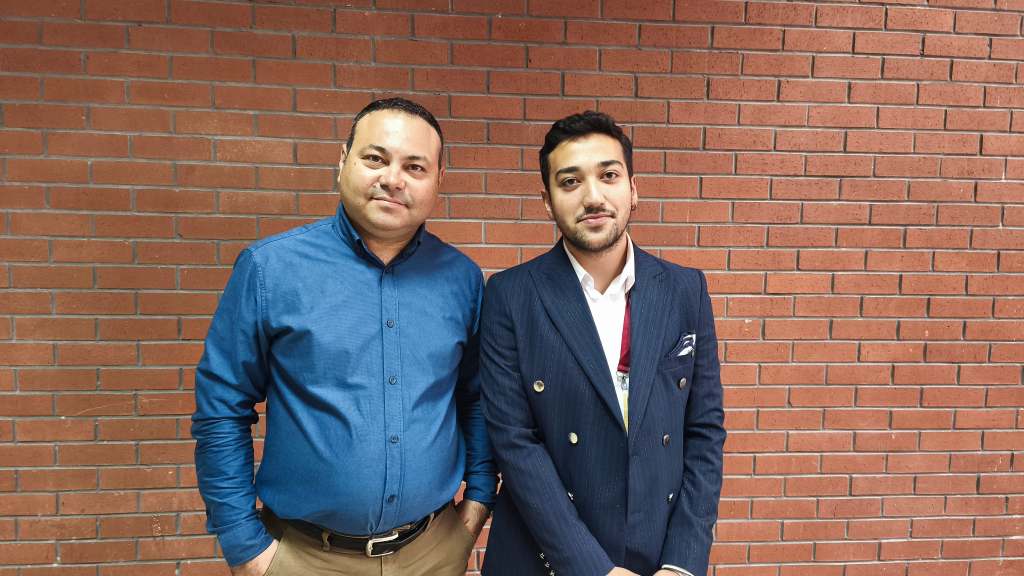
Assoc. Prof. Dr. Erhan Akdemir: The European Union is turning to hard power
The annexation of Crimea and Russia’s attack on Ukraine have caused great concern within the European Union. The ongoing war is frightening European states. Assoc. Prof. Dr. Erhan Akdemir of Anadolu University said Russia’s expansionist policy aimed at regaining former Soviet territories can be seen in the wars in Crimea and eastern Ukraine. He stated that he does not believe there would be any attacks on countries like Poland, Romania, Hungary, and Finland, and he does not think the states would allow such a situation. Akdemir said, “Especially with the arrival of Trump, the two have become leaders who understand each other.”
Akdemir explained the ongoing problems. Looking at the EU’s foreign policy, he stated that countries use two main forms of power: soft power and hard power. He said the European Union is an international actor that traditionally prefers soft power and uses various instruments to achieve its interests and goals. He stated that diplomacy and economic sanctions are tools of soft power in foreign policy. He noted that military intervention using tanks, aircraft, and weapons falls under the concept of hard power. He emphasized that in resolving international crises, soft power is used more frequently than hard power.
After Donald Trump came to power in the United States, Akdemir said Trump’s views on NATO’s future, on transatlantic relations, and his relationship with Russia all worked against the European Union. “Trump questions NATO and tells Europe to ensure its own security and not be a burden on him,” Akdemir stated. He emphasized that if the US were to leave NATO, the EU would not be able to act collectively in response to a Russian attack on one of its member states.
Regarding the question of whether Turkey could become an EU member, considering its growing defense industry and regional importance, Akdemir said the following: “Between 2009 and 2010, Turkey’s economic and political indicators, including democracy, the rule of law, separation of powers, and human rights, were in a very good state. If that version of Turkey existed today, it would be perfectly ready for EU membership under current international developments. Membership would have occurred easily. However, the regression in meeting the Copenhagen criteria is now the biggest question mark in the minds of the EU.”

 Eskısehir ın Europe