Green deal is coming: exporters in Eskişehir must not be caught unprepared
Mümine Kara
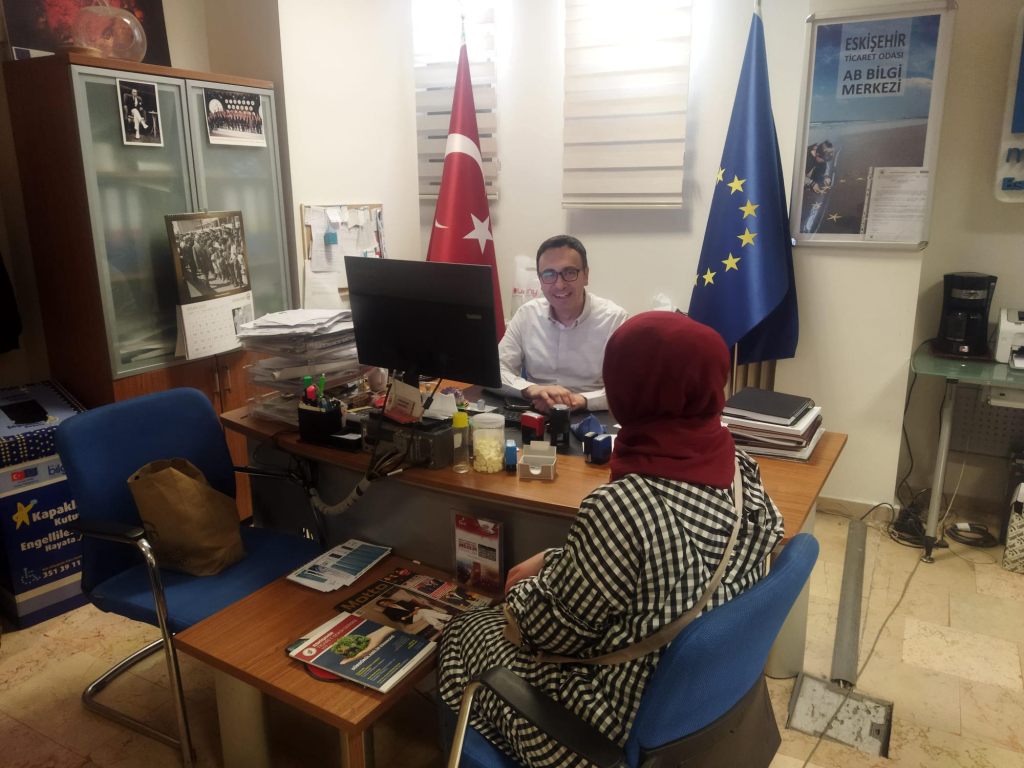
Gökhan Çobansoy, the Coordinator of the EU Information Center at the Eskişehir Chamber of Commerce, made statements about how the carbon pricing introduced within the scope of the European Green Deal and the Carbon Border Adjustment Mechanism (CBAM) will affect exports from Turkey to European Union countries.
“The European Union aims to be climate neutral by 2050. To achieve this goal, it not only monitors production within its own borders but also considers the carbon footprint of imported products.
At this point, the CBAM comes into play. A fee will be applied based on the carbon content of products such as cement, iron-steel, and aluminum imported from outside the EU. Products from Turkey will also be directly affected,” he said.
Eskişehir industry is affected
Çobansoy also made evaluations specific to Eskişehir. He stated that there are exporting companies in areas such as machinery, metal, and ceramics in the city, and that some of these companies fall under the scope of CBAM. “Our companies will face carbon costs starting from 2026,” he said.
The European Green Deal will officially come into force on January 1, 2026. From this date onward, companies in Turkey will encounter new financial obligations. Çobansoy emphasized the need to prepare now:
“The period from 2023 to 2025 is a transition phase. During this phase, companies are not required to make payments but are expected to submit detailed emission reports.”
What should companies do?
The main issues that companies operating in Eskişehir should pay attention to were listed as follows:
- They must calculate their carbon footprint on a product basis. Which product, which raw material, and which production stage creates how much emission must be clearly identified.
- They must strengthen their data infrastructure. Monitoring, reporting, and verification (MRV) systems in compliance with EU standards must be established.
- They must review their production processes. Steps must be taken in areas such as energy efficiency projects, the use of renewable energy, and waste heat recovery. These are no longer just environmental preferences, but commercial necessities.
- Export contracts must be reviewed. How the carbon cost will be shared with customers in Europe should be discussed in advance.
ETS system on the way
Çobansoy stated that Turkey is in the process of establishing its own Emissions Trading System (ETS) in order to align with Europe, and that the system is expected to come into effect by the end of 2025. Within this scope:
- The government will impose carbon emission limits on certain sectors.
- Companies exceeding the limit will have to purchase carbon allowances.
- These limits will be gradually reduced every year.
He noted that this system will create significant financial pressure, especially for energy-intensive sectors (such as iron-steel and cement). However, he emphasized that if designed correctly, the system could also serve as an incentive for green transformation.
He stressed the importance of major industrial companies in He stressed the importance of major industrial companies in Eskişehir adapting to this process in advance and planning how much carbon allowance they will need by conducting ETS simulations.
Climate law and competitive power
Çobansoy also stated that the Climate Law currently being prepared in Turkey will establish the legal framework for carbon pricing and ETS. With this law:
- The obligation for companies to reduce their emissions will become a legal requirement.
- The pricing for carbon emissions will be clarified.
- How the revenues generated from this system will be used will be determined (e.g., incentives for green investments).
“If these revenues are returned to companies as support for transformation, it will have a positive impact on competitiveness. However, if it becomes just a financial burden, the competitiveness of exporting companies may decrease,” he said.



 Eskısehir ın Europe