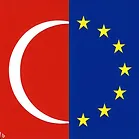
Turkey–EU relations discussed on Europe Day
Nusret Kankaya

A panel titled “Evaluation of the Effects of Recent Global and Regional Developments on Turkey–European Union Relations” was organized by Odunpazarı Municipality and the Eskişehir European Union Association on the occasion of May 9, Europe Day.
On May 9, 1950, the foundations of the European Union were laid with a declaration announced by French Foreign Minister Robert Schuman. Known as the “Schuman Declaration,” the document aimed for lasting peace in Europe. At the 1985 summit held in Milan, it was decided that May 9 would be celebrated as “Europe Day.” As a candidate country for the European Union, Turkey is also part of this historical memory, culture, and identity. In this context, a panel was held with the contributions of Odunpazarı Municipality and ES-AB on the occasion of May 9, Europe Day.
The panel featured retired Ambassador and Istanbul MP Namık Tan and Eskişehir Anadolu University Faculty of Economics and Administrative Sciences academic Prof. Dr. Özgür Tonus as speakers. The event concluded with the speakers’ assessments of Turkey–EU political and economic relations, a Q&A session, and a classical music performance.
Odunpazarı Mayor Kazım Kurt delivered the panel’s opening speech. In his address, Kurt said, “Our relations with the European Union are very fluctuating, inconsistent. We wanted to learn from the experts on this matter. Therefore, I thank our guests for coming. I wish you a good listening.”
A peace project
The panel was moderated by Anadolu University academic Assoc. Prof. Dr. Erhan Akdemir. Akdemir stated that the European Union stands before us as an important example of a “peace project.”
The panel sought to answer how global and political developments have affected Turkey, both positively and negatively. Namık Tan stated that the European Union is above all a civilization project and that Turkey must definitely be a part of this project. He emphasized the need to let go of certain prejudices and participate in this project sincerely in order to build a better future and establish strong international relations.
“As a Turkish citizen, I also want my country to live in prosperity, in a fair system based on the rule of law, that always values and embraces freedoms. And I want the prosperity this brings to be equally distributed to everyone in my country. But we need to question ourselves,” said Tan.
Recalling Atatürk’s principles of reaching the level of contemporary nations, Tan stated that achieving the level of contemporary civilization is only possible by adopting, internalizing, and implementing the values established within the European Union structure, and that there is no other way.
Tan also pointed out that, within the framework of the Visa Liberalization Dialogue consisting of 72 criteria in five thematic groups, only six criteria remain unmet.
At the end of the panel, Prof. Dr. Özgür Tonus took the floor. Emphasizing that the European Union began 75 years ago as a civilization project, Tonus said that Turkey should also become a member. He stated that one of the main reasons is that more than 40% of Turkey’s exports go to EU countries and that most foreign investors in Turkey are European. He noted that there are still opportunities for development in economic relations, pointing out that there is a customs union between Turkey and the EU, and that no tariffs are applied to industrial products in foreign trade. He emphasized that this is a major advantage for Turkish industry.
Tonus said that the customs union was considered a transitional phase toward EU membership, but that the process has now entered an indefinite period.
After the signing of the Customs Union agreement in 1995, Turkey was officially recognized as a candidate for full membership in the European Union on December 12, 1999. Accession negotiations began on October 3, 2005. Despite the years that have passed, Turkey has yet to become a full member of the EU.
The panel concluded with the message that in the current global context, the question of whether Turkey should be an EU member or not is no longer a matter of preference, but a necessity. However, it was also noted that the uncertainty and hesitation regarding this direction continue.


 Eskısehir ın Europe