Eskisehir ın Europe

Eskişehir’s “Car-Free Sunday” Initiative draws inspiration from Europe

Metropolitan Municipality aims to bring EU sustainable mobility policies into urban life

Yusufhan Toraman

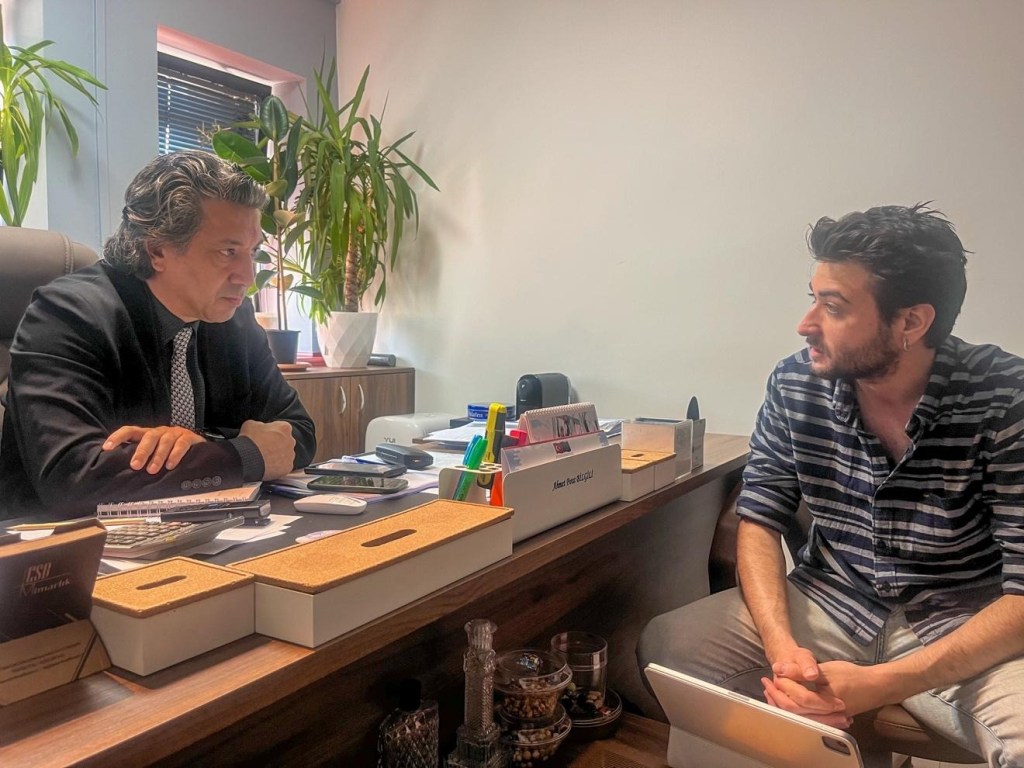
The “Car-Free Sunday” initiative launched by Eskişehir Metropolitan Municipality as part of European Mobility Week has emerged as one of the local reflections of the European Union’s sustainable transport and environmental policies. Speaking to Yusufhan Toraman, Head of the Municipality’s Department of Transportation, Ahmet Fırat Bilgili said the project goes beyond traffic management and is directly linked to the climate crisis, carbon emissions, public life and the contemporary urban models widely adopted across Europe.
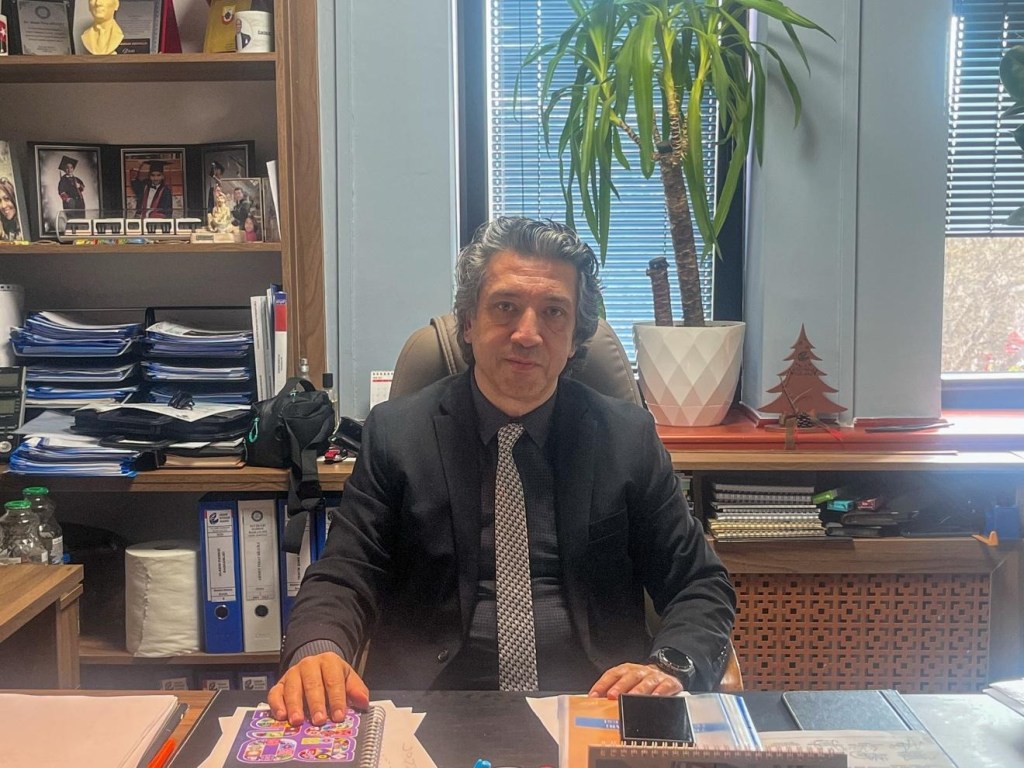
Ahmet Fırat Bilgili, Head of Transportation Department at Eskişehir Metropolitan Municipality

In recent years, the European Union has prioritized transport policies aimed at reducing carbon emissions as part of its fight against climate change. While cities such as Paris, Amsterdam and Copenhagen continue to expand models that reduce private car dependency, pedestrianized zones, cycling infrastructure and strong public transportation networks have become central elements of modern urban planning.

Sustainable transportation policies have also become increasingly visible in the urban planning strategies of local administrations in Türkiye. The “Car-Free Sunday” model, already implemented in many European cities during European Mobility Week, has now begun to take shape in Eskişehir as well.

The Car-Free Sunday initiative in Eskişehir is regarded as one of Türkiye’s local examples of this transformation. Municipal officials define the project not merely as a transportation arrangement, but as one of the first steps toward adopting Europe’s sustainable urban vision in Eskişehir.

Implemented across selected sections of Odunpazarı, Tepebaşı and Atatürk Boulevard, the initiative aims to reduce the use of private vehicles and encourage residents to adopt alternative means of transportation.

Speaking about the municipality’s goals and the European examples that inspired the project, Bilgili stressed that many cities around the world are no longer treating such practices as one-day events but as a long-term lifestyle.

“Our primary objective through European Mobility Week is to make social life more accessible for our citizens. The whole idea behind this week is to focus on how we can create a healthier environment and develop more efficient public transportation systems. Around the world, Sundays during this week are celebrated as ‘Car-Free Sundays.’ Yet many cities have already transformed this idea from a single-day event into a way of life. The Netherlands and Copenhagen are among the best examples, and Paris also has very comprehensive implementations,” he said.

Bilgili noted that policies aimed at reducing private car use have become a part of daily life in many European cities and said Eskişehir’s project was inspired by the same approach.

“As Eskişehir Metropolitan Municipality, our goal was not simply to close roads to traffic. We wanted to create awareness about the climate crisis and contribute to reducing the city’s carbon footprint,” he said.

Bilgili emphasized that the initiative should not be seen as limited to a few designated zones.

“Currently, we close one area in Odunpazarı, one in Tepebaşı and part of Atatürk Boulevard, which has become the city’s main artery. Our real intention is to encourage people not to drive there. Instead, we want residents to leave their cars behind, walk, ride bicycles or spend time outdoors with their children. The three zones are symbolic; ultimately, we hope people across all neighborhoods in Eskişehir will reduce private car use on Sundays,” he stated.

He also underlined the importance of lowering private vehicle dependency in line with EU climate policies.

“When private car use decreases, fuel consumption also declines, which directly contributes to climate protection,” he added.

We took France, the Netherlands and Denmark as examples

Bilgili said the municipality closely examined urban models in Europe while designing the project and drew inspiration particularly from practices in the Netherlands, France and Denmark.

“We took France, the Netherlands and Denmark, especially Copenhagen, as examples. We also examined global models such as Singapore, where bicycle use is extremely widespread,” he explained.

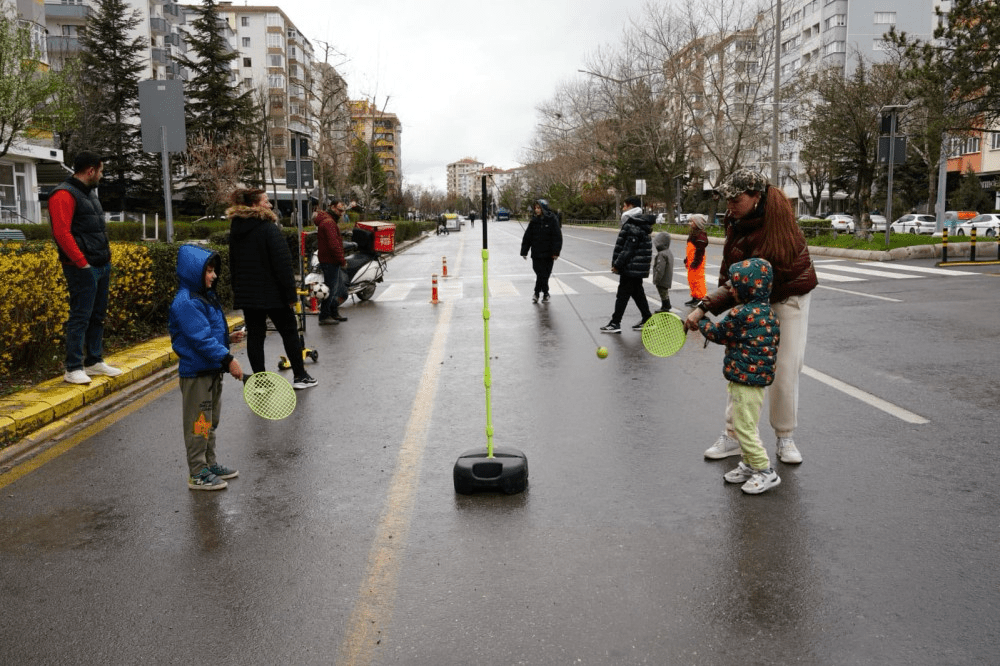
A moment from the Car-Free Sunday initiative.

He stressed that the project is not solely about increasing bicycle use.

“People ask whether Eskişehir’s climate is suitable for cycling, but this initiative is about much more than bicycles. Sitting on a camping chair in a car-free street, reading a book, having coffee or simply walking are all part of this project,” he said.

Bilgili also pointed to the transformation of urban life and argued that children have gradually lost their connection with the streets.

“I am 53 years old. I grew up in the city, but back then we could freely play in the streets. As cities expanded, children became trapped behind computer and television screens. Reconnecting younger generations with nature, greenery and human interaction is essential for socialization and stronger communication,” he noted.

According to Bilgili, children played sports, roller-skated and painted during Car-Free Sundays.

“Children in the neighborhood played volleyball, basketball and mini football, and drove their remote-control cars. During the second event, one child hesitantly asked our mayor, ‘Can I really ride my bicycle here?’ That deeply affected me. Once they realized there were no cars passing by, we saw people roller-skating and drawing pictures in the streets,” he said.

We can no longer see snowfall in Eskişehir

Bilgili stated that the initiative is directly linked to the EU’s climate policies and argued that the effects of climate change are now visible in daily life in Eskişehir.

“There is also the climate dimension of this issue. We can no longer see proper snowfall in Eskişehir. Fifteen years ago, snow would reach our knees in this city, but now we are struggling with drought. Two days ago the temperature was zero degrees, and today it is 25 degrees. This is not normal,” he said.

Bilgili added that the municipality has also been collecting technical data regarding the initiative.

“We are not only closing roads during Car-Free Sundays. Through our adaptive intersection systems, we collect real-time data to measure whether vehicle use across the city decreases and whether the initiative is being properly understood,” he explained.

Although carbon emission measurements are still at an early stage, Bilgili shared some of the municipality’s initial observations.

“We have only been working on this project for four months and have just started gathering data. Our Climate Department also supports us. However, there is a technical challenge: the closed-off area is only about 450 meters long, while traffic continues around it. Measuring carbon emissions specifically for that limited area on a single day is not easy,” he said.

He also pointed out that citizens still tend to rely on private vehicles, especially during warm weather.

“Many people still tried to come to the area by car because there was an event taking place. We repeatedly told them: please do not drive here just to walk along the boulevard. Use public transportation, walk or ride a bicycle. The idea is not to arrive by car, but to leave your car at home,” he stated.

We cannot yet say we have fully reached EU standards

Bilgili said the European Union views sustainable transportation as a fundamental urban right, but acknowledged that Eskişehir has not yet fully achieved those standards.

“To be honest, I cannot say we have fully reached those standards yet, because this is also a matter of building traffic culture from a young age,” he said.

He stressed that social transformation takes time and noted that European urban culture is shaped not only by infrastructure but also by public awareness.

“We are trying to make this initiative continuous and support it through social media, but there is still a perception barrier in society,” he explained.

Bilgili argued that the climate crisis is not taken seriously enough by the public.

“Unfortunately, if water stops running for two days, the whole city reacts immediately. But when we say that water levels at Porsuk Dam are reaching alarming levels, nobody pays attention. What will we do if there is no water left next year? This is what we are trying to explain,” he said.

In developed world cities, city centers are pedestrianized

Bilgili stated that European urban planning has become a major reference point for Eskişehir’s transportation projects and said new pedestrianization projects remain on the agenda.

“In developed world cities, city centers are pedestrianized, ring routes are established around them and transportation is provided through public transit,” he said.

Recalling the debates that took place during the tram project in 2002, Bilgili noted that pedestrianized zones have since become central hubs of urban life.

“When we first announced that Doctors Street would be closed to traffic, local shopkeepers protested in front of the municipality building. But once the project was completed and the pedestrian zone was established, the same shopkeepers came back to thank us because pedestrian traffic increased business,” he explained.

Bilgili said new pedestrianization projects are included in Eskişehir’s transportation master plan, including areas such as the Odunpazarı Museums District, the university surroundings and Cengiz Topel.

Free public transportation is not within our authority

In many European examples of Car-Free Sunday initiatives, public transportation is often made free or discounted. Responding to questions about whether a similar policy could be introduced in Eskişehir, Bilgili pointed to the municipality’s legal limitations.

“Making public transportation free is not within our authority; it depends entirely on presidential decrees. For example, on April 23 a decree was issued and transportation became free, but on May 1 and May 19 no such decree was issued, so free transportation could not be implemented. We also wait for decrees during holidays. As a municipality, we cannot independently reduce fares to zero,” he said.

Nevertheless, Bilgili stated that the municipality has introduced different measures to encourage public transportation on Car-Free Sundays.

“What we can do is increase the frequency of services on Car-Free Sundays. We operate at weekday-level capacity on Sundays so that citizens who leave their cars behind will not face long waiting times. This is the level of service we are currently able to provide,” he said.

We never viewed this project through the lens of votes

The initiative has sparked mixed reactions among the public in Eskişehir, especially on social media. Bilgili, however, argued that the atmosphere on the ground is very different from the online response.

“Neither our mayor nor we ourselves have ever viewed this project through the lens of votes. Perhaps we can say 50 percent support it and 50 percent criticize it, but if you only look at social media, it creates the impression that 95 percent are against it,” he stated.

Bilgili said that once the purpose of the project is explained directly to citizens, reactions tend to change.

“I spent hours in the field during those Sundays, standing alongside our staff. Sometimes a citizen would approach us angrily while we were closing the roads, but once we explained the purpose of the project, the climate crisis and its importance for children, they would say, ‘Alright, this is actually a good initiative,’ and walk away satisfied,” he said.

He also recalled that similar debates emerged when pedestrianization and car-free policies were first introduced in European cities and emphasized that all necessary safety precautions have been taken.

“We never experienced any fights or serious confrontations in the field. Safety is extremely important; alternative routes for ambulances, fire trucks and police vehicles are always prepared, and our teams can reopen roads within seconds if necessary,” he noted.

According to Bilgili, the most significant outcome of the project is the revival of a public culture within the city.

“What we see in the streets are happy children and young people drawing pictures outdoors. More than the criticism on social media, this genuine satisfaction in public spaces and the environmental vision it represents for the future are what truly matter to us,” he concluded.

Trend