European food culture reshapes Turkish cuisine over time
Gözde Demirel
From croissants to coffee culture, European culinary influences in Türkiye reflect a long historical process rather than a recent trend, says Associate Professor Osman Güldemir, highlighting both cultural exchange and transformation.
A long historical interaction, not a short-term trend
The growing presence of European-origin foods such as croissants, macarons, risotto, and pizza in Türkiye is not a recent phenomenon but part of a much deeper historical process. According to Associate Professor Osman Güldemir, culinary culture does not change overnight.
“This is not a matter of just three or five years, because culinary culture is not something that immediately comes to life as imagined. It is influenced by many factors such as socioeconomic level, belief, philosophy of life, geography, diplomacy, and education,” he said.
Güldemir emphasized that to understand today’s transformation, it is necessary to look back centuries, particularly to the modernization period of the Ottoman Empire.
“Until the 19th century, contemporary societies took the Ottoman Empire as a model, including its culinary culture. However, from the 19th century onwards, there was a reversal, and a strong tendency toward Europeanization emerged,” he noted.
This shift led to Turkish chefs being sent to Europe and European chefs coming to Ottoman lands, resulting in the gradual adoption of European dishes, techniques, and tools.
From traditional dining to modern practices
Güldemir explained that this transformation is visible not only in food but also in eating habits.
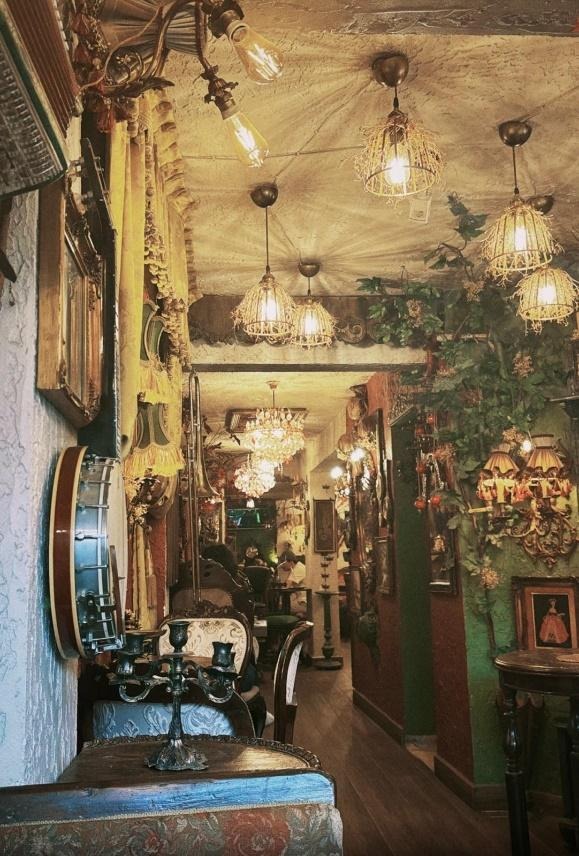
“In the past, Turkish society ate from shared dishes on the floor. Over time, this changed into table dining with individual portions and the use of utensils such as forks, knives, and spoons,” he said.
He also pointed out that ingredients and techniques once unfamiliar to Turkish society became widely known.
“A society that did not know ingredients like chocolate centuries ago has now become familiar with chocolate and chocolate-based desserts. Similarly, techniques such as canning, which spread after the Industrial Revolution in Europe, were adopted and used,” he added.
Rise of European-style cafés and cultural concerns
The increase in European-style cafés and restaurants, especially in major cities, reflects another layer of this transformation. However, Güldemir warned that this shift may have long-term cultural consequences.
“Coffee became widespread in Turkish lands starting from the 16th century. Europeans later encountered coffee through travelers and adopted Turkish-style coffeehouses. But today, although the world learned coffee through Turks, non-Turkish actors are the ones profiting from it,” he said.
He added that new-generation cafés may negatively affect the transmission of traditional cuisine.
“In these places, non-Turkish foods and beverages are predominantly sold. Since younger generations consume food in such venues, future generations may grow up distanced from Turkish cuisine and may need to rediscover it later,” he explained.
‘European-style food’ as a local reinterpretation
Güldemir stated that while some European dishes can be reproduced close to their original versions, many are adapted due to economic constraints.
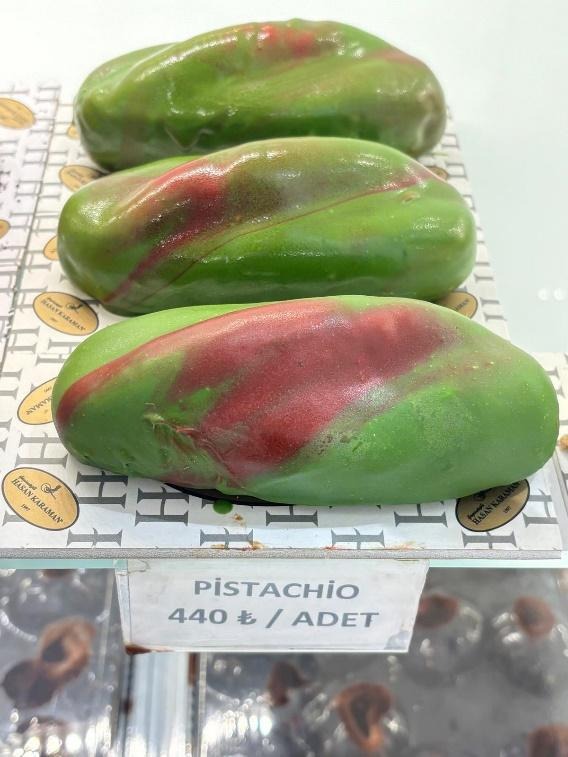
“Some products, such as pastries, certain pasta types, pizza, and some sauces, can be produced close to their European origins. But beyond that, I do not think they can be made or presented exactly as in their original countries,” he said.
He highlighted cost as the main reason behind this transformation.
“Bringing original ingredients requires imports, which increases costs. As a result, these dishes are adapted using local and relatively lower-quality ingredients. This lowers the price but also reduces authenticity, turning them into reinterpreted European dishes,” he explained.
Trends: some stay, others disappear
Not all European food trends disappear quickly in Türkiye. Some become permanent parts of daily life.
“Some products are very well adopted over time. For example, chocolate cake, ready-made pasta, biscuits, and potato-based dishes are now perceived as components of Turkish cuisine by younger generations,” Güldemir said.
However, he noted that highly trendy items tend to fade quickly.
“Overly trendy, high-fashion food items come and go. This is also true for Turkish cuisine itself. Some products become very popular, are commercialized rapidly, but disappear just as quickly when they fail to generate sufficient profit,” he said, citing the example of lokma shops that rapidly opened and closed within a few years.
Ottoman influence on European cuisine
Güldemir also underlined the historical influence of Ottoman cuisine on Europe, citing the example of the croissant.
He explained that during the last siege of Vienna, local bakers, who worked at night, noticed Ottoman troops attempting to dig tunnels and alerted the authorities. Following this, they created a crescent-shaped pastry inspired by the Ottoman symbol.
He also highlighted the Ottoman role in spreading coffee across Europe.
“Coffee, as I mentioned before, was introduced to Europe largely through the Ottomans. Dishes such as dolma, meatballs, sarma, certain desserts, sorbets, kebabs, döner, and even yogurt have become widely adopted in Europe. These can be seen as gifts of Ottoman Turkish and broader Turkish-Islamic culture to Europe,” he said.
The impact of Cedric Grolet and visual pastry culture
Güldemir pointed out that the influence of French pastry culture has long been strong globally, but contemporary figures have amplified this effect.
He noted that chefs with strong influence in France had already standardized many practices worldwide. However, he emphasized that Cedric Grolet’s approach has taken this influence further.
“His focus on a more creative approach and his strong use of new media increase his impact. It becomes easier for his signature products to spread. Therefore, he definitely has a significant influence on Turkish pastry culture,” Güldemir said.
Shared culinary heritage across borders
Addressing similarities between Turkish and Greek cuisines, Güldemir emphasized shared historical and geographical roots.
“Turks and Greeks were essentially one people until about a century ago. Just as we consider people from different regions of Türkiye as part of one nation today, the same applied in the past,” he said.
He added that similarities in ingredients, geography, and lifestyle make culinary overlaps natural rather than surprising.
Güldemir argued that the use of different names for similar dishes across regions should be seen as cultural richness rather than conflict.
“Even within the same country, similar dishes can have different names and variations. For example, höşmerim differs between regions, and tarhana varies from household to household,” he said.
He noted that similar patterns exist across neighboring countries, where dishes share ingredients and techniques but differ in naming.
Güldemir described gastronomy as a powerful tool in both cultural and political contexts.
“Food has been used in politics for centuries and should be used because it is a soft power. You can convey, defend, and promote many ideas through food without conflict,” he said.
He added that gastronomy operates across all levels, from families to nations, making it a significant cultural and diplomatic instrument.
Strong potential in gastronomy tourism
Evaluating Türkiye’s position in gastronomy tourism, Güldemir highlighted its strong potential.
“Turkish cuisine is the product of a culture that has experienced many civilizations and geographies, from Central Asia to Anatolia, from the Black Sea to North Africa and the Middle East,” he said.
He stressed that Türkiye’s rich geography and biodiversity contribute to a highly diverse culinary landscape.
However, he also pointed out structural challenges.
“Tourism is a fragile sector. Any instability can immediately affect it. When people do not spend significantly on food and beverage experiences, it becomes difficult to strengthen gastronomy tourism,” he explained.
Despite these challenges, he remains optimistic.
“Our potential is very high. If we ensure stability and work in a long-term, multidimensional way, we have the capacity to even surpass Europe,” he said.
Finally, Güldemir emphasized the role of gastronomy in strengthening Türkiye’s relations with Europe.
“There is an exchange not only in food itself but also in equipment, architecture, workforce, and ingredients. Chefs are exchanged, businesses expand abroad, and technologies are shared,” he said.
He concluded that food and beverage industries form a strong economic chain that continues to reinforce international connections.

