Millions in EU funds in Eskişehir: but where is the ordinary citizen in this story?
Zafer Yanmaz
Eskişehir is one of Turkey’s most European-facing cities with its young population, established universities, and dynamic structure. Huge facilities are built, young people go abroad, and cooperatives are supported with millions of liras of European Union (EU) grants in the city. But how aware is a citizen walking on the streets of Eskişehir of all this? Does the European Union really touch the lives of people in Eskişehir, or do the projects stay in the hands of a specific group?
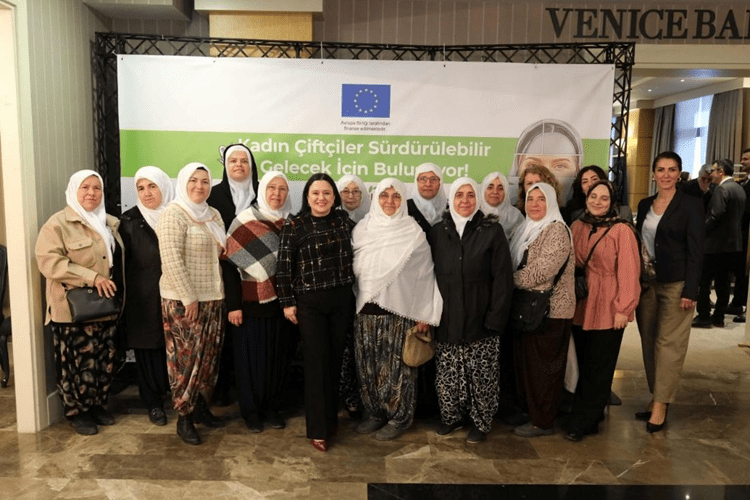
To find the answer to this question, we first gave the microphone to different parts of the public; to students, young people, tradesmen, workers, and a teacher candidate. Then, we asked the claims on the field to the addressee of the subject, European Union Information Center Coordinator Gökhan Çobansoy.
The perception of the European Union on the street
The questions we asked the citizens show that the perception of the EU is still stuck in certain molds. University student Yağmur Yücel says that when the EU is mentioned, the first things that come to her mind are the visa issue and economic relations for Turkey. Yücel says, “As a general association, different cultures living together and human rights standards come to my mind. I heard about events providing global internship opportunities like AIESEC in Eskişehir, but I don’t think the EU touches my life. I have never heard of the Eskişehir EU Information Center either.”
Teacher candidate Hakan Küçük approaches the subject more institutionally. Emphasizing a strong economy and cooperation between countries, Küçük states that he only feels the EU’s presence in Eskişehir indirectly through the Erasmus programs of the universities: “We feel its effect through education opportunities and cultural interaction, but I can’t say I feel it very clearly in my daily life. I heard about the Information Center, but I don’t know much about what it does.”

For Nazlıcan Kaya, a working young person, the European Union means both an opportunity and a difficulty. Kaya talks about her future plans with a little smile: “I can say it has no effect on my life right now. But if I have the chance to start a business in the future, it will have a big effect. For example, a ‘çibörek’ (raw pastry) shop wouldn’t be bad. Maybe I could even have the chance to improve my foreign language. I don’t know the Information Center, I hope their work reflects well on us.”
Tuğba Kaya, working as a security chief in a private company, is unaware of local projects even though she works in an international company: “Even though I work in a European company, I can’t say I experience European standards and work culture in my business life. If you ask what the EU is doing locally on the streets of Eskişehir, I have no idea. We hear there are grants for the business world, but these projects don’t seem to reach the citizen on the street or an ordinary worker. I don’t think I have ever passed by the Information Center.”
Tradesman Abdurrezzak Seyfettin Akkaş looks at the issue from a completely practical point of view: “When we say EU, euros, customs, and visas come to our mind. What do they do in Eskişehir? Believe me, tradesmen have no idea. Students come and go, we hear that. If they provide a grant or support to a tradesman or a small business, they need to tell us this. How would I know the existence of a center that doesn’t touch my life?”
Are the projects limited to the university circle?
We asked this complaint and “unawareness” of the street to a person who knows these claims closely, European Union Information Center Coordinator Gökhan Çobansoy. Çobansoy does not deny the fact that most of the public does not know the projects and summarizes the situation with these words:
“This is not unique to Eskişehir. The work we do is mostly project-based, temporary, and for specific target groups. Also, the ‘European Union’ topic is still perceived as a distant and technical area by some people. Projects are mostly concentrated in a certain circle. Especially people who know how to write projects and master the application processes benefit more from these opportunities.”
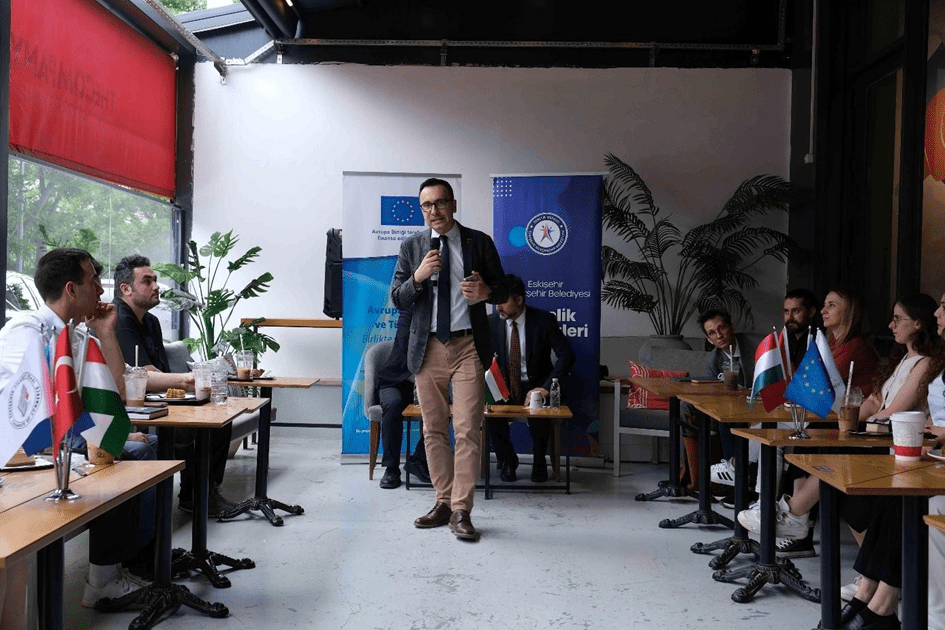
Stating that Eskişehir is a more curious city about the EU compared to the Turkey average due to its young structure, Çobansoy adds that students, academics, and civil society representatives benefit from the center the most. The ones who come the least are, just as we saw in our interviews; small tradesmen, workers, and young people in business life.
Million-lira grants and life-changing stories
However, the visibility problem does not mean there is no concrete success. The data shared by Çobansoy clearly shows what would be missing in Eskişehir if there were no EU funds. Aside from young people gaining experience abroad and supporting civil society, serious steps are taken in local development.
The most striking example of this is the Milk Processing Facility brought to life by the Mihalıççık Women Entrepreneurs Cooperative. This project, with a budget of approximately 11 million 741 thousand TL, started kashar and curd cheese production in the region by receiving a 70 percent (8 million 219 thousand TL) EU grant. As women’s participation in production increases, the local economy directly strengthens.
Also, not only big projects but individual stories are remarkable. Many middle school students who were taken to Belgium and Ireland after winning EU story and knowledge competitions held in past years, direct their lives today by becoming doctors or continuing their education abroad.
“Not politics, social project: time to go to the field”
Emphasizing that the biggest difficulty in explaining the European Union to the people of Eskişehir is that the issue is perceived only as a “political membership process,” Çobansoy clearly states the solution:
“We need to be on the field more. We should provide more visibility not only in hall events but also in neighborhoods, schools, and local areas. We should tell more examples that touch people’s lives directly.”
The picture is quite clear. Eskişehir carries great potential for European Union projects, and millions of liras of value are produced on the field. However, unless these projects are included in Nazlıcan’s ‘çibörek’ shop dream, uncle Abdurrezzak’s counter, and Tuğba’s daily work, the European Union will remain a distant “visa and bureaucracy” concept for the streets of Eskişehir. Overcoming the walls of the center and catching the language of the street stands before us as the most important step to change the EU perception in Eskişehir.
 Eskisehir in Europe