Prof. Dr. İncilay Cangöz: “Journalism students should gain international experience in order to understand the structural transformation of news production.”
A journalism bridge is being built from Anadolu to Europe
Aylin Özge Ayar
Within the scope of an academic cooperation extending from Eskişehir to Europe, Anadolu University Journalism Department students will experience current changes in digital media and journalism in an international environment through the BIP program to be held in Greece.
Students of Anadolu University Faculty of Communication Sciences, Department of Journalism, are preparing to receive international journalism education in Greece within the scope of the BIP program called “Global Media and Culture Summer Academy,” carried out with partner universities in Europe. The face-to-face phase of the program, coordinated by Aristotle University of Thessaloniki and including Anadolu University among its partners, will take place in Kastoria, Greece, between 1 and 7 July 2026. In the program, which will be attended by five students and one faculty member from Anadolu University, trainings, workshops, and joint projects will be carried out in areas such as digital journalism, data journalism, AI-supported media production, mobile journalism, social media practices, and crisis and conflict reporting. The Erasmus-supported program offers an important opportunity for students in terms of both professional development and Türkiye–Europe academic relations.
Paksoy: “Journalism students can contribute to friendship between the two countries.”
Prof. Dr. Alaaddin F. Paksoy, a faculty member of Anadolu University Faculty of Communication Sciences, Department of Journalism, and the coordinator of the BIP project, stated that the program is an important opportunity to strengthen the academic connection between Anadolu University and partner universities in Europe. Paksoy said that Anadolu University has had an Erasmus partnership with Aristotle University for many years and added, “Aristotle University in Thessaloniki is a university we have been cooperating with for a long time. There are academics there whom we met and came together with at different conferences in the past. The participation process for this summer school started upon their invitation.”
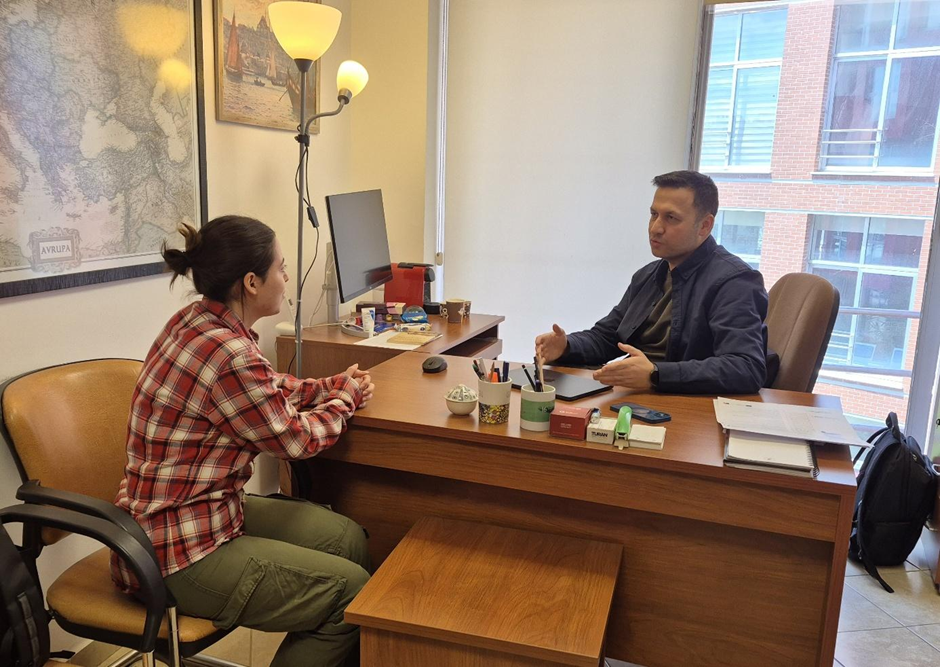
Paksoy said that the summer school is supported by Erasmus funds. He also stated that Anadolu University responded positively to this invitation and that the agreement was signed last term. Paksoy emphasized that the program should not be seen only as a short-term academic mobility activity. He said that such activities may open the door to new collaborations for both students and academics in the future.
Opportunity for students to gain international experience
Paksoy stated that the academic cooperation with Aristotle University offers important opportunities for students. He reminded that many students from Anadolu University went to the university in Thessaloniki through Erasmus in previous years. Paksoy said that student demand for Thessaloniki has decreased in recent years, but relations with Aristotle University still continue.
Paksoy said that this summer school will provide students with a valuable experience in terms of studying abroad, listening to lectures from different academics, getting to know Greece, learning basic Greek, and making international friendships. He emphasized that such experiences are important not only for academic development but also for personal development.
Paksoy: “Taking courses in different environments improves students’ vision”
Evaluating the effects of international mobility programs on journalism education, Paksoy said that always taking courses in the same faculty and department can improve students only to a certain point. Paksoy said, “Always taking courses in the same faculty and the same department improves a student only to a certain point. Being in different environments, taking courses from different lecturers, preparing joint assignments with different students, and doing this in a foreign language is a much more valuable experience.”
According to Paksoy, such exchange programs are important activities that improve students’ vision not only for the journalism department but also for all departments. He also stated that listening to the experiences of academics and sector representatives from different countries is important for journalism and reporting.
The importance of a global perspective in journalism is increasing
Paksoy stated that it is becoming more important for today’s journalism students to gain international experience. He said that journalism can be practiced at the local level, but it also has national and international dimensions. Paksoy expressed that the journalism profession should be considered with a more global perspective in the future and emphasized that it is important for students to communicate with different people in international environments.
Paksoy also said that practical studies will be carried out during the summer school. He stated that students will prepare projects not only among themselves but also with students from different countries. In this way, he said, students will gain experience in preparing news at an international level, using digital technologies, and using artificial intelligence in journalism processes.
The most clear difference between journalism education in Türkiye and Europe: Foreign language
Paksoy stated that there is not a big gap between journalism education in Türkiye and Europe. He said that the main difference appears in foreign language education. Paksoy said that foreign language education has been a long-term problem in Türkiye and added, “We can teach English and other foreign languages to our students to a certain point, but some students stop learning a foreign language after preparatory education.”
Paksoy stated that students in Europe are more confident about foreign languages. He said that he thinks Türkiye is behind, especially in the use of English. On the other hand, he stated that journalism education in Türkiye is at a similar level to many universities in Europe in terms of theoretical and practical aspects.
Türkiye-Greece academic cooperation can contribute to peace
Paksoy stated that academic cooperation between Türkiye and Greece is important for communication and media. He drew attention to the historical and geographical ties between the two countries. Paksoy said that Türkiye and Greece are nations that have lived in the same geography, and this situation brings both feelings of friendship and brotherhood, as well as some problems from the past.
Paksoy emphasized that journalism students and journalists have an important role at this point. He stated that joint studies in communication and media can be effective in overcoming the problems between the two countries. Paksoy said, “If students and journalists in Greece and Türkiye do projects together, I think the two countries can build much closer relations in the future.”
Paksoy stated that such academic and cultural cooperation can help reduce political and social problems between the two countries over time. He also said that especially young generations getting to know each other better can help develop a peaceful perspective.
Paksoy’s advice to students: “Do not miss these opportunities”
Paksoy also gave advice to students who want to take part in European Union-supported projects. He said that students should not miss such activities. Paksoy emphasized that the students who will attend the program will represent the Republic of Türkiye and Anadolu University. He asked students to build constructive dialogues and to be active in the program.
Paksoy stated that students should not be shy about foreign language. He reminded them that other students who will attend the program also use English as a second language. Paksoy said, “Try to be active in joint works, discussions, and practical courses. Show yourself and represent our country in the best way.” Paksoy stated that the program can open an important door for students in terms of new friendships and future academic or professional cooperation, and he wished the summer school to be productive and successful.
After Prof. Dr. Alaaddin F. Paksoy’s evaluations on the academic cooperation and student mobility aspects of the program, Prof. Dr. İncilay Cangöz, Head of the Department of Journalism at Anadolu University Faculty of Communication Sciences, who will attend the BIP program together with the students, also drew attention to the importance of the project in terms of journalism education, digital transformation, and international experience.
Cangöz: “EU-supported projects contribute by transforming students’ ways of thinking.”
Cangöz: “The global media ecosystem no longer operates within national borders”
Prof. Dr. İncilay Cangöz stated that it has become more important for journalism students to gain international experience today. She said, “The global media ecosystem no longer operates within national borders. With the internet, spatial borders have disappeared. Journalism students should gain international experience not only to have ‘been abroad,’ but also to understand the structural transformation of news production.”
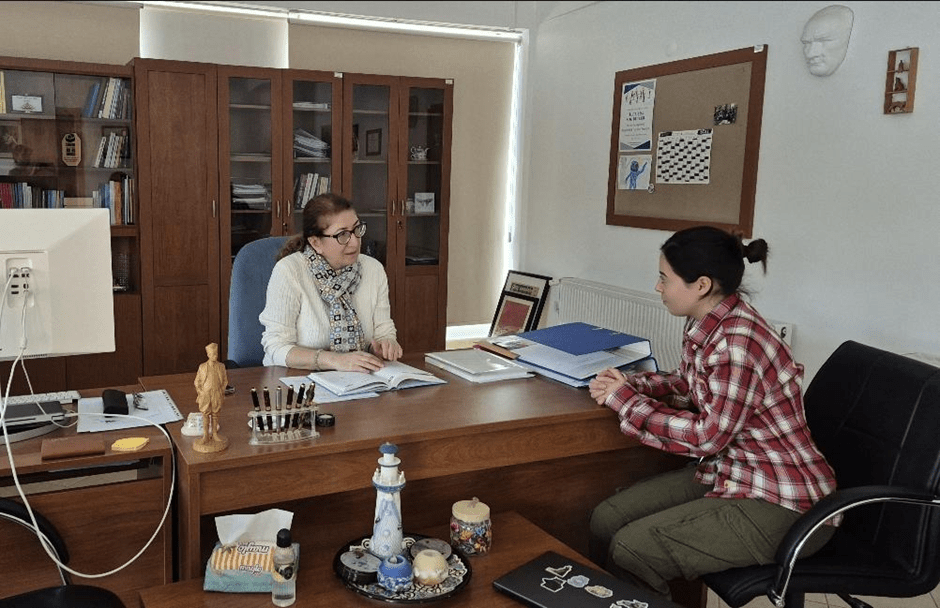
Cangöz evaluated the role of Anadolu University Faculty of Communication Sciences, Department of Journalism, in the BIP project as more than being only a partner institution that sends students. Cangöz said, “The role of Anadolu University Faculty of Communication Sciences, Department of Journalism, in this BIP project is more than being only a partner institution that sends students; it is a strategic academic partner that contributes to redefining journalism education in the age of digital transformation.”
Cangöz stated that the areas focused on by the project directly match the current transformation areas in communication education. She said that topics such as data journalism, AI-supported news production, mobile journalism, digital storytelling, and crisis reporting are important in this respect.
Cangöz stated that the department supports students to work in international and interdisciplinary teams. In this way, she said that the department helps students analyze the global media environment in a comparative way.
Cangöz said that international mobility programs make not only a technical contribution but also an intellectual contribution to journalism education. She said, “International mobility programs make not only a technical but also an epistemological contribution to journalism education.” Cangöz stated that students who come into contact with different media systems can experience news production culture, ethical standards, freedom of expression, and digital journalism practices in a comparative way. She said that this process breaks perspectives that are limited to one national media paradigm and develops critical thinking capacity.
Cangöz stated that traditional journalism education was mostly designed around the nation-state. She said that news values, source networks, legal knowledge, and media system analyses were mostly local. On the other hand, she stated that disinformation networks, platform companies, algorithms, war, migration, climate, health crises, and changes caused by artificial intelligence now work on a global scale.
Cangöz said that a journalist needs to see other systems in order to understand their own media system. She said, “This is the main point of the problem; international experience creates a cognitive break here and broadens the perspective. The student realizes this: ‘My own normal is not universal.’ Without this awareness, critical journalism remains weak.”
Cangöz: “European Union-supported projects are not only travel or certificate-oriented activities”
Evaluating the contribution of European Union-supported projects to students’ professional development, Cangöz said, “European Union-supported projects contribute to students’ professional development not only by giving technical skills but also by transforming their ways of thinking.”
Cangöz stated that such projects, especially in the fields of communication and media, take students out of a single national media system or academic approach and bring them into a multicultural, interdisciplinary, and international working environment. She said that in this process, students develop skills that are critical in today’s professional world, such as teamwork, problem solving, using a foreign language, producing with digital media tools, and communicating with different cultural perspectives.
Cangöz also mentioned the importance of academic cooperation between Türkiye and Greece in the field of communication and media. She said, “Academic cooperation developed between Türkiye and Greece in the field of communication and media makes it possible not only to share information between universities but also to evaluate mutual perceptions between the two societies in a more critical and multidimensional way.”
Cangöz said that joint projects carried out in journalism and digital media studies help students experience different media systems, news production practices, and cultural approaches in a comparative way. She also stated that these projects create a basis for developing common solutions to cross-border problems such as migration, disinformation, digital hate speech, and intercultural communication.
Cangöz also gave advice to students who want to join EU-supported projects. She said, “European Union-supported projects are not only travel or certificate-oriented activities. These projects are intensive learning processes that test students’ academic discipline, working culture, communication skills, and professional adaptation capacity.”
Cangöz said that students should approach projects not with the romance of “foreign experience,” but as an opportunity to transform themselves. She stated that for students who want to work in the field of communication and media, improving foreign language skills, using digital media tools actively, adapting to teamwork, and being open to working with different cultures are now basic requirements.
Students see the project as a professional and cultural experience
Students who will join the BIP project see it not only as an opportunity to study abroad but also as a professional and cultural experience where they can improve themselves in the field of journalism. Students aim to gain experience in areas such as digital media, artificial intelligence, intercultural communication, and international teamwork.
Tülay Ürem, who has previous Erasmus experience, said that such projects help students improve themselves. She said, “I wanted to take part in a different project with other students in the field.” Ürem also stated that European Union-supported projects strengthen relations between Turkish and European students and drew attention to the importance of cultural sharing.
Eren Berk emphasized that journalism is no longer limited to traditional methods. Berk stated that areas such as artificial intelligence, VR/AR, and data journalism are important for the future of media. He said, “Journalism is no longer learned only in the classroom; following the world, technology, and different cultures is a must for this profession.”
İrem Yıldırım, who said she was excited to be accepted to the project, stated that she did not want to be limited to theoretical courses. Yıldırım said, “When we come together in a project with people we call foreigners on paper, we can understand how many common points we actually have. These projects are a good step to break prejudices,” and drew attention to the importance of the BIP project for intercultural communication.
Barış Kılınç said that other students should go out of their comfort zones. Kılınç said, “Our faculty and Eskişehir offer us very good opportunities; but there is a huge world outside waiting for us to touch it,” and stated that students should not limit themselves with the thought of “Will I be selected?”
Aylin Özge Ayar also stated that the BIP project offers students not only a foreign experience but also an opportunity to gain new perspectives in the field of journalism. Ayar said, “Coming together with students from different cultures will be an important experience for both our professional development and our ability to look at journalism from a wider perspective,” and drew attention to the importance of intercultural communication.
 Eskisehir ın Europe